
Deemokratiko Theatro
Ethical FinanceDeemokratiko Theatro
From Athens to OxyContin. From the Balfour Declaration to Citizens United. One long story about who actually runs the world.
By Abdalla Lotfy
12 June 2026
Deemokratiko Theatro
How lobbying ate democracy. Two and a half thousand years of bought governance, manufactured wars, sacrificed lives, and the long quiet capture of the only system the world keeps pretending it has.
Most people hear the word lobbying and picture a man in a suit buying a senator lunch. That image is older than your grandparents and almost completely useless for understanding what is actually happening to your government, your country, your wallet, your children's future, and the wars they will be sent to fight in. The reality is bigger, older, and dirtier than the cartoon, and it does not begin in Washington or even in the modern world. It begins with the word democracy itself.
This is the story of how a small group of industries, foreign governments, bankers, propagandists, and quiet operators have spent the last century and a quarter buying the laws you live under, the wars your children fight in, the prices you pay for medicine, the news you read in the morning, the food on your plate, the air you breathe, and even the borders of the countries that now appear on every map as if they had always existed. It did not start with Citizens United. It did not start with the Cold War. It started long before either, and it has never stopped.
Here is how it happened. Here is who paid. Here is who died. And here is what the word democracy has actually meant, in practice, for almost everyone who has ever lived under it.
Part One - What Democracy Actually Was, and What It Became
The word democracy is Greek. It means rule by the people. It comes from the city-state of Athens in the fifth century before Christ, and from the very beginning the word lied.
Athenian democracy excluded women. It excluded slaves, who outnumbered free citizens. It excluded foreigners and their descendants, even if they had lived in the city for generations. The total number of people allowed to actually participate in the so-called rule by the people was somewhere between ten and twenty percent of the adult population. The rest - the majority - were governed without consent. The word for what was happening was democracy. The reality was rule by a small slice of one specific group over everyone else.
This is the original sin of the word. It has been with us ever since.
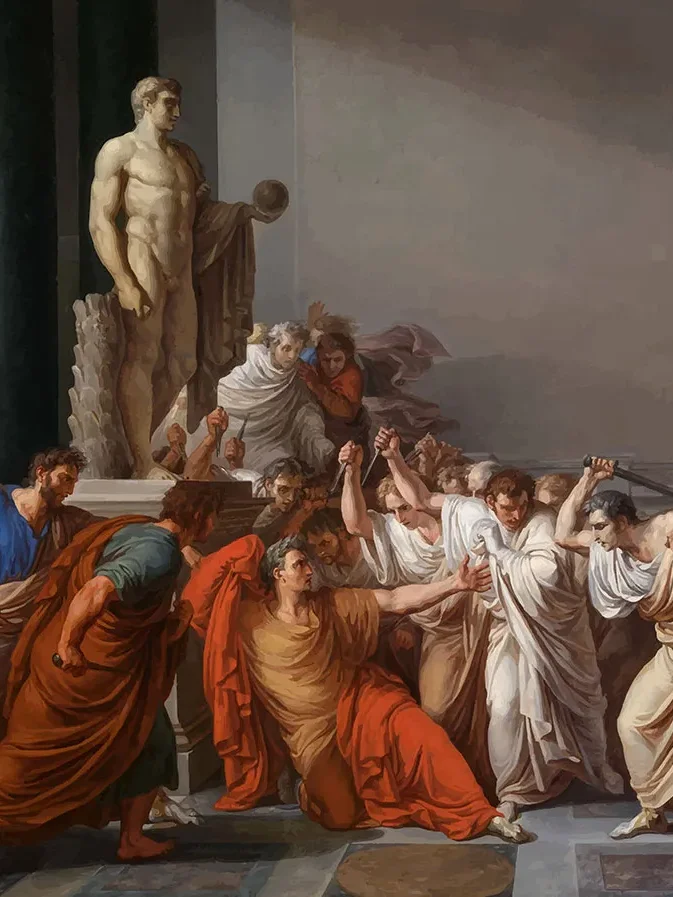
Rome called its system a republic - res publica, the public thing. In practice it was rule by a senatorial aristocracy. When the masses got organised enough to threaten the senatorial class, the senatorial class found a strongman who could keep order. Julius Caesar. Then his nephew Augustus. The republic continued in name. The Senate continued to meet. The forms were kept. The substance was gone. Rome was an empire in everything except the words it used about itself.
England developed Parliament starting in the thirteenth century. It was made of nobles and clergy. The Commons, when it was added, represented the propertied middle class. The vast majority of English people had no vote, no representation, and no say in the laws that taxed and conscripted them. This continued for six hundred years.
The American founders, in 1787, designed a constitution that was explicitly sceptical of pure democracy. James Madison wrote in The Federalist Papers that democracies have ever been spectacles of turbulence and contention. The Constitution they wrote gave the vote only to white men with property. The president would be chosen not by the people but by an Electoral College designed to filter their preferences through wealthier intermediaries. Senators would be chosen by state legislatures, not by direct election - a system that did not change until 1913. Slavery was protected. Native Americans were excluded entirely. Women could not vote. The country called itself a democracy from the beginning. By any honest count, it would not become one for over a hundred and fifty years, and arguments are still being made today that it never quite did.
Women in the United States did not get the federal vote until 1920. Women in the United Kingdom did not get full voting rights until 1928. Women in France not until 1944. Women in Switzerland not until 1971 at the federal level. Black Americans were systematically prevented from voting through poll taxes, literacy tests, and outright violence until the Voting Rights Act of 1965 - and the protections of that act have been steadily eroded since 2013.
The honest summary is this. Universal suffrage in the so-called Western democracies is barely a hundred years old. In many places it is much younger. And almost from the moment universal suffrage arrived, the systems began building new ways to neutralise it.
Lobbying is the main one.
Today, in the United States, a Princeton and Northwestern study has examined 1,779 major policy decisions over twenty years and concluded that the policy preferences of average American voters have a near-zero, statistically non-significant impact on what actually becomes law. The preferences of wealthy donors and organised business lobbies are almost entirely what predict what passes. The American voter, in other words, votes. The American voter does not rule. The system is technically a democracy and functionally an oligarchy. The word and the thing have come apart.
This is not unique to America. Across most of the Western world, surveys show that ordinary citizens believe their governments serve the rich and not the public. They are correct. The mechanisms differ. The outcome is the same.
So when somebody tells you the world is divided between democracies and dictatorships, what they are actually telling you is one of two things. Either they have not looked at the data, or they are selling you something.
Democracy as practised today is a brand name. It is a costume. It is a thing that countries put on when they go out, so that other countries treat them politely at international meetings and let their elites onto the right university campuses. Behind the costume, the question is the same as it has always been. Who decides? And the answer, almost everywhere, is the same. Whoever can pay to be in the room.
Lobbying is how they pay.
Part Two - Building Nations to Order
Before we get to modern lobbying, you need to understand something most people have never been taught. Many of the countries that exist on the map today exist because someone paid for them to exist. Not the people who live there. Someone else.
For three centuries before the modern nation-state, the dominant players in global politics were not countries. They were companies. The British East India Company, founded in 1600, eventually ran most of the Indian subcontinent. It had its own army, larger than that of most European nations. It collected taxes. It administered justice. It started wars. It executed people. When India was finally handed to the British government in 1858, after a massive uprising the company had brutally crushed, it was not because Indians voted to be ruled by London. It was because the British political establishment decided the company had become too embarrassing to defend.
The Dutch East India Company did the same in what is now Indonesia. The Hudson's Bay Company did it across much of what is now Canada. The British South Africa Company carved out what is now Zimbabwe and Zambia and named the largest piece after its founder, Cecil Rhodes. These were corporate states. The shareholders made the decisions. The locals had no vote.
This pattern did not end with formal decolonisation. It changed clothes.
In the late nineteenth and early twentieth century, the United Fruit Company - an American firm with massive plantations across Central America - used its political influence in Washington to shape American foreign policy across an entire region. When elected governments in Guatemala, Honduras, or other Central American nations passed land reform laws that threatened United Fruit's holdings, United Fruit lobbied. American troops were sent. American-backed coups were arranged. The countries themselves became known as banana republics, a phrase coined specifically to describe nations whose political life had been hollowed out by foreign corporate interests. In 1954, the Central Intelligence Agency overthrew the democratically elected president of Guatemala, Jacobo Arbenz, because his government had proposed nationalising unused United Fruit land. The architects of the coup in Washington included executives and former executives of the company itself. The American public was told the operation was about stopping communism. The documents declassified decades later show that the corporate interest came first.
Whole nations have been written into existence by lobbying. The borders of the modern Middle East were largely drawn in 1916 by a secret agreement between two officials - Mark Sykes of Britain and François Georges-Picot of France - who carved up the territory of the dying Ottoman Empire into spheres of influence with a ruler and a pen. The peoples who actually lived in those territories were never consulted. The agreement was only revealed to them when the Bolsheviks, after taking power in Russia, made it public to embarrass the Allied powers in 1917. The borders that resulted, after some adjustment, are still mostly the borders today. Iraq. Syria. Lebanon. Jordan. Palestine. These were not natural countries. They were administrative units invented by men in European capitals.
The Balfour Declaration of 1917 was a single sentence in a letter from the British Foreign Secretary to Lord Rothschild, declaring that His Majesty's Government viewed with favour the establishment of a Jewish homeland in Palestine. It was the result of years of patient lobbying by the Zionist movement in London. The local Arab population - who at the time made up over ninety percent of Palestine's inhabitants - was referred to in the same sentence only as the existing non-Jewish communities, whose civil and religious rights should not be prejudiced. They were a footnote in the document that decided the future of their land. A nation was being declared into existence by a foreign government on a piece of paper, on the basis of a lobbying campaign conducted in another continent. What happened next has been killing people for over a hundred years.
This is what lobbying can do at full scale. It does not just buy laws. It builds countries. It draws borders. It writes peoples into existence and out of existence. The maps in your child's geography textbook are the residue of these decisions.
Part Three - Before Lobbying Had a Name
In the late nineteenth century, in the country that would become the world's loudest preacher of democracy, the corporations did not lobby the government. They were the government.
Standard Oil owned the politicians of Pennsylvania and Ohio outright. The railroad barons wrote the rate laws that were supposed to regulate them. When Senator Boies Penrose of Pennsylvania was asked who he represented, he answered without flinching that he represented the men who paid the assessments to keep him in office. There was no scandal in saying it. It was the system.
The era was called the Gilded Age because everything looked golden on the surface and was made of cheaper metal underneath. Senate seats were openly bought through state legislatures. Newspapers were owned outright by industrialists who set their editorial lines from the boardroom. Workers who organised were shot in the streets by private security firms paid by the men who employed them. The Pinkerton agency killed nine strikers at Homestead Steel in 1892. Andrew Carnegie, the owner, was on holiday in Scotland.
In 1907, after decades of public anger and a wave of muckraking journalism, Congress passed the Tillman Act, banning corporations from making direct contributions to federal political campaigns. It was the first real attempt to put a wall between private wealth and public power.
The wall lasted about an afternoon.
Within months, corporate executives were simply writing personal cheques. Within a year, they were funnelling money through trade associations and shell organisations. Within a decade, the entire workaround infrastructure that defines modern lobbying was being built. A law had been passed. The law had been routed around. Nothing fundamental had changed.
This pattern is the pattern. Every major lobbying reform of the last century and a quarter has been followed by the same routine. Outrage. Legislation. A new technique to bypass the legislation. Quiet normalisation. Repeat.
If you remember nothing else from this article, remember that. The system has been learning, generation after generation, how to absorb reform without changing.
Part Four - The Merchants of Death
The First World War turned American industrialists into the richest arms dealers in human history.
Between 1914 and 1918, US weapons exports to the Allies multiplied many times over. DuPont sold so much gunpowder it became one of the largest companies in the world. Bethlehem Steel armoured the Royal Navy. The bankers, led by J P Morgan, financed the Allied war effort and made a fortune on the interest. By the time American troops finally entered the war in 1917, the American economy was already locked into Allied victory because the loans had to be repaid. The neutrality the country had announced in 1914 had been quietly bought out from underneath.
A decade later, in 1934, the United States Senate launched the Nye Committee, named for Senator Gerald Nye of North Dakota. Its mandate was to investigate the role of arms manufacturers and bankers in pushing the country into the war.
What the committee found should have changed American politics forever. Arms makers had lobbied governments around the world to escalate tensions and increase weapons orders. They had bribed officials in dozens of countries. They had collaborated across the supposed enemy lines, with German and British and American firms sharing patents and profits even while their nations were killing each other's soldiers. The bankers had financed every side they could. The phrase that came out of the hearings was Merchants of Death - the title of the bestselling book the investigation inspired, written by Helmuth Engelbrecht and Frank Hanighen.
The American public was horrified. Polls showed overwhelming majorities believed the country had been tricked into the previous war and would refuse to be tricked again. For a brief moment it looked like real reform was coming.
It did not come.
What did come, in 1938, was the Foreign Agents Registration Act - FARA. The law was a direct response to Nazi propaganda operations that had been quietly funding American newspapers, radio shows, and political organisations to soften the country up for a fascist Europe. The premise of the law was simple. If you are working in the United States on behalf of a foreign government to shape American policy or public opinion, the American public has a right to know. You must register. You must disclose. You must be transparent.
It was a good law. We will return to what happened to it.
What did not come was any meaningful restraint on the merchants of death. By 1941, the same industries the Nye Committee had identified were back at full production, this time for a war that, on its own merits, almost everyone agrees needed to be fought. But the precedent was set. The arms industry had survived. Its lobbyists had absorbed the public outrage and waited it out. The next war would make them rich again. So would the war after that.
This is the lobbying playbook in its purest form. Take the hit when you must. Survive the public outrage. Keep the doors open. Wait for the next opportunity. There is always a next opportunity.
Part Five - The Peace That Never Was
The Second World War ended in 1945. The American war economy did not.
By 1944 American factories had been producing more aircraft, tanks, ships, and ammunition than the rest of the world combined. After the surrender, everyone assumed the country would demobilise the way it had after the First World War. It did not. The factories kept running. The companies that had grown rich off Hitler kept lobbying after he was dead. The Cold War provided the perfect demand cycle. The Soviets were an enemy worth fearing, far enough away that the fear could last forever.
In January 1961, on his way out of the White House, a five-star general named Dwight Eisenhower gave a televised farewell address. He warned his own country, in his last days in office, that the arms industry he had personally helped build was becoming a power unto itself. He named it. The military-industrial complex.
This was the man who had commanded the Allied invasion of Europe. He was not a peace activist. He was telling Americans that they had built something that would one day be impossible to control.
Almost nobody listened.
Defence procurement became a jobs programme spread across enough congressional districts that no politician could vote against it without paying a price at home. Lockheed, Boeing, General Dynamics, Northrop, Raytheon. Names that have been at the centre of American economic life for longer than most people now alive have been breathing.
The factory floor became the floor under American politics. And it stayed there.
Part Six - The Powell Memo
If you want to understand the shape of modern lobbying, you have to understand a single document.
On 23 August 1971, a Virginia corporate lawyer named Lewis Powell wrote a confidential memo to his friend Eugene Sydnor at the United States Chamber of Commerce. Powell sat on the boards of eleven corporations, including the tobacco giant Philip Morris. Two months later, Richard Nixon would nominate him to the Supreme Court. The memo was titled Attack on American Free Enterprise System.
Powell's argument was that American business was losing. Consumer protection laws were being passed. Environmental regulations were being introduced. Workplace safety rules were being enforced. Public interest groups like the ones around Ralph Nader were winning cases against corporations. Universities were teaching critical theory. Newspapers were sympathetic to labour. The whole intellectual and political climate, in Powell's view, had turned against capital.
The solution, Powell wrote, was for business to fight back. Not through individual companies but through coordinated, long-term, well-funded political combat. Build think tanks. Take over universities. Fund sympathetic media. Place corporate-friendly judges on the courts. Mobilise the Chamber of Commerce into a permanent political force. Recognise that political power was necessary, must be cultivated, and must be used aggressively.
The memo was not public when Powell was confirmed to the Supreme Court. It leaked the following year through the columnist Jack Anderson. By then the work was already underway.
The numbers tell you what happened next. In 1968, around 100 corporations had public affairs offices in Washington. By 1978, the number was over 500. In 1971, the year of the Powell memo, 175 firms had registered lobbyists in the capital. By 1982, the number was nearly 2,500. The National Association of Manufacturers moved its headquarters from New York to Washington in 1972 and was explicit about why. As its chief put it, the thing that affects business most today is government.
In a single decade, American corporations restructured themselves around political combat. The Heritage Foundation was founded in 1973. The American Legislative Exchange Council in 1973. The Cato Institute in 1977. The Federalist Society in 1982. A whole institutional ecosystem was built to produce favourable policy research, draft favourable legislation, train favourable judges, and fight cases that would expand corporate rights.
This is the world we live in. It was designed.
It is worth saying out loud what Powell was admitting in that memo, even without meaning to. He was admitting that without sustained, coordinated, well-funded political combat, business interests would lose to the preferences of ordinary citizens. The whole memo is a confession that democracy, if left alone to function, would not produce the policies the wealthy wanted. Their answer was to capture democracy from the inside. They have largely succeeded.
Part Seven - The Captures
Once the infrastructure was built, specific industries used it to buy specific laws. The pattern repeats so consistently that it is worth naming it. Industry threatened by regulation. Industry funds lobbying, think tanks, friendly academics, and political campaigns. Regulation softened, delayed, or killed entirely. Public harmed. Repeat.
Tobacco. The cigarette industry knew its product caused lung cancer in the late 1940s. Its own internal scientists confirmed it through the 1950s. Rather than warn the public, the industry spent the next forty years funding fake research, undermining real research, lobbying against warning labels, fighting taxes, suing regulators, and buying politicians. The Tobacco Institute, founded in 1958, was a lobbying machine disguised as a scientific body. Internal documents released through the 1998 Master Settlement Agreement showed executives discussing the dependence-creating qualities of nicotine while publicly denying that nicotine was addictive. Estimates of how many people died from preventable smoking-related diseases during the decades of denial run into the tens of millions worldwide. The tobacco industry was not destroyed. It was fined. The companies are still in business. They sell to developing countries now where the regulation is weaker.
Sugar. In 1967, the Sugar Research Foundation paid three Harvard scientists the equivalent of around fifty thousand dollars in today's money to publish a review in the New England Journal of Medicine downplaying the role of sugar in heart disease and shifting the blame to dietary fat. The review shaped dietary advice for the next four decades. Tens of millions of people switched to low-fat, high-sugar diets and developed the diabetes and metabolic disease epidemics we live with now. The funding source was not disclosed at the time. It was only revealed in 2016 when researchers went through the archives. The men who took the money are dead. The diseases their work helped cause are still killing people.
Fossil fuels. ExxonMobil's own scientists informed company executives in 1977 that carbon dioxide emissions from burning fossil fuels would cause significant warming of the planet, with major consequences for human life. The company knew. Internal documents leaked decades later show senior executives discussing the science as established. What the company then did was spend hundreds of millions of dollars over the following thirty years funding climate denial - funding fake scientific institutes, political campaigns, journalists, and doubt. The cost is being paid right now in floods, fires, and droughts in every country on earth.
Pharmaceuticals. The pharmaceutical industry has been the largest lobbying spender in the United States every single year since 1999. From 1999 to 2024 it spent more than six billion dollars buying influence. That money bought the law that banned Medicare from negotiating drug prices for nineteen years. It bought the rules that let drug companies charge American patients ten times what they charge European ones for the same drug. It bought the silence of regulators while the Sackler family flooded American towns with OxyContin.
The opioid crisis deserves its own paragraph because it is what an unrestrained pharmaceutical industry actually looks like when it can shape its own rules. Internal documents from Purdue Pharma show executives knew by the early 2000s that OxyContin was being widely abused. They kept pushing sales representatives to drive prescriptions higher. They paid doctors. They funded patient advocacy groups that lobbied against opioid restrictions. Between 1999 and 2022, more than 700,000 Americans died from opioid overdoses - more than every American war combined since the Korean War. When the company finally collapsed, the Sackler family had extracted over ten billion dollars from it. Most of the money was already overseas, beyond the reach of American courts. The family negotiated settlements that protected them personally from criminal prosecution. Several of the Sacklers still live in mansions. They still attend gala dinners.
Finance. In 1933, after the crash that caused the Great Depression, Congress passed the Glass-Steagall Act. It separated commercial banks from investment banks. The wall stood for over sixty years. Then Wall Street lobbied for two decades to bring it down. In 1999, the Gramm-Leach-Bliley Act repealed Glass-Steagall. Within nine years, the financial system that had been deregulated to allow the gambling to merge with the savings collapsed in the worst global financial crisis since the 1930s. Millions of Americans lost their homes. Trillions in wealth was wiped out. The banks that caused the crisis were bailed out with public money. Almost none of the executives went to jail.
Defence. The defence industry has not been captured by lobbyists. It is the lobbyists. Senior Pentagon officials retire and immediately join the boards of the contractors they used to oversee. A 2024 government report found that of 718 senior Pentagon officials who left between 2014 and 2019, around 80 percent went on to work for major defence contractors. The revolving door did not slow. It accelerated.
Real estate. The National Association of Realtors spent $86 million on federal lobbying in 2024 alone. Among the things it has bought over the years is the mortgage interest deduction, the elimination of any serious federal effort to address housing supply, and a consistent regulatory environment that protects existing homeowners and landlords against the interests of renters and first-time buyers. The housing crisis you live through every month is not an accident. It is a policy outcome.
Big tech. Meta, Amazon, Alphabet, and Apple now spend tens of millions of dollars each on federal lobbying, employ armies of former regulators, and write the actual text of the laws that supposedly regulate them. The result is regulation that looks tough on paper and is full of loopholes the companies' lawyers wrote themselves. Tech is just the newest industry to learn the steps.
Part Eight - Manufactured Pretexts for War
You cannot send a country to war without a reason. The trick of the lobbying industry has always been to provide the reason, even when it is invented.
In 1898, the American battleship USS Maine exploded in Havana harbour. The cause was almost certainly an internal coal bunker fire. American newspapers owned by William Randolph Hearst and Joseph Pulitzer ran headlines screaming that the Spanish had done it. Public outrage was manufactured into a war fever. The Spanish-American War followed within months. The United States acquired Cuba, Puerto Rico, the Philippines, and Guam. Hearst sold millions of newspapers. The Maine almost certainly blew up on its own.
In 1915, the British passenger liner Lusitania was sunk by a German submarine, killing 1,198 people including 128 Americans. The sinking was used as major pro-war propaganda in the United States. What was not said at the time, but has since been confirmed by archival research, is that the Lusitania was carrying munitions for the British war effort, making it a legitimate military target under international law of the period.
The Gulf of Tonkin incident of August 1964 became the legal basis for the massive escalation of the Vietnam War. The American public was told that the North Vietnamese had attacked American warships in international waters without provocation. What has since been declassified - including by the National Security Agency itself - is that the second alleged attack, the one that triggered the resolution, never actually happened. The basis for the Vietnam War was a lie. Three million Vietnamese and 58,000 Americans died for that lie.
In 1990, immediately before the United States entered the first Gulf War, a young Kuwaiti woman gave tearful testimony to Congress about Iraqi soldiers ripping babies out of incubators in Kuwait City hospitals and leaving them to die on the floor. It was a lie. The woman was the daughter of the Kuwaiti ambassador to the United States. Her testimony had been coached by a public relations firm, Hill and Knowlton, which had been paid millions of dollars by the Kuwaiti government to sell the war to the American public. There were no incubator babies.
In 2002 and 2003, the case for the Iraq War rested on three claims - weapons of mass destruction, yellowcake uranium from Niger, and links to Al-Qaeda. All three were false. The yellowcake documents were forgeries. There were no weapons of mass destruction. There was no Al-Qaeda link. The war killed hundreds of thousands of Iraqis and over 4,000 American soldiers. It created the conditions that produced ISIS. It cost American taxpayers over two trillion dollars. The contractors made record profits. The architects of the war are still on television.
This is the pattern. The lie does not have to last forever. It only has to last long enough to get the war started.
Part Nine - The Leaders Who Did Not Bend
The cleanest way to understand who controls a country is to look at what happens to the leaders who refuse to take orders.
Iran, 1953. The democratically elected Prime Minister Mohammad Mossadegh nationalised the country's oil industry, controlled by the Anglo-Iranian Oil Company - the predecessor of BP. The British government, working with the CIA, organised a coup. Operation Ajax overthrew Mossadegh in August 1953. The Shah was installed as an absolute monarch. The 1979 Islamic Revolution that produced the current Iranian government was a direct response to the decades of dictatorship that followed.
Guatemala, 1954. President Jacobo Arbenz proposed a modest land reform that would have transferred unused agricultural land to peasants. United Fruit was unhappy. United Fruit's lawyers and lobbyists in Washington included men who were also senior officials in the Eisenhower administration. The CIA organised Operation PBSUCCESS. Arbenz was overthrown. Guatemala fell into decades of brutal military rule, civil war, and right-wing death squads. Estimates of the dead range from 100,000 to 200,000.
Congo, 1961. Patrice Lumumba, the first democratically elected Prime Minister of newly independent Congo, was assassinated within months of taking office. He had spoken openly about retaining national control over the country's vast mineral wealth. The Belgian government and the CIA were involved in the killing. Congo has spent the next sixty-four years in some combination of dictatorship, war, and exploitation. The most valuable cobalt deposits on Earth - the metal in the battery of the phone in your hand - sit under Congolese soil. The Congolese people see almost none of the wealth that flows from it.
Burkina Faso, 1987. Thomas Sankara refused IMF and World Bank conditional lending, launched mass vaccination programmes, banned female genital mutilation, and told African nations that their debt to former colonial powers was an instrument of colonialism and should be refused. In October 1987, he was assassinated in a coup. A Burkinabe trial in 2021 and 2022 convicted his successor in absentia, and documents point to French complicity. France has never accepted responsibility.
These are not isolated incidents. They are not coincidences. They are a pattern that has been repeated across the world for the past century. Leaders who challenge the financial and resource interests of major Western powers and their corporate allies die, are overthrown, or are imprisoned. Leaders who cooperate are fed and decorated.
Part Ten - Those Who Died for the Lies
Every manufactured pretext for war we have already discussed produced bodies.
The Spanish-American War of 1898 killed roughly 30,000 American soldiers and an unknown but much larger number of Cubans, Filipinos, Spaniards, and Puerto Ricans. The Philippine-American War that followed killed somewhere between 200,000 and a million Filipinos. The bodies are not coincidental. They were the cost of a lie about an exploding battleship.
The Gulf of Tonkin lie produced the Vietnam War. 58,000 Americans dead. Three million Vietnamese dead. Cambodia and Laos destabilised. The carpet bombing of Cambodia produced the Khmer Rouge, which then killed another two million Cambodians. One lie at the top creates dead in waves for decades.
The yellowcake forgery and the WMD propaganda produced the Iraq War. Roughly 4,500 American soldiers dead. Estimates of Iraqi dead range from 200,000 to over a million. ISIS, which formed in the prisons and chaos of post-invasion Iraq, killed and displaced millions more across Iraq and Syria. The refugee waves from those wars reshaped European politics for a generation.
This is what the body count of lobbying actually looks like when you trace it all the way down. It does not end at the bill that gets signed. It ends at the funeral of someone you do not know, in a country you have never visited, whose name you will never learn, who died for a story that was paid for by people who never met them.
Part Eleven - The Scapegoats and the Show Trials
The other way ordinary people get sacrificed by powerful interests is in trials - public ones, designed to teach a lesson, to demonstrate authority, or to punish dissent.
The Salem witch trials of 1692 executed twenty people. Most modern historians read the trials as a way of resolving social tensions by sacrificing people on the margins of a divided community - almost all of them women, almost all of them poor. The witchcraft accusations were the formal charge. The actual crime was being inconvenient.
The Soviet show trials of the 1930s under Stalin made an industrial science of the same principle. Old Bolsheviks who had helped lead the Revolution were tortured into confessing to bizarre conspiracies and then executed. The purpose was not justice. Hundreds of thousands were killed in this way during the Great Terror. Millions more were sent to the camps.
The McCarthy era and the House Un-American Activities Committee, from the late 1940s through the late 1950s, destroyed thousands of Americans - intellectuals, teachers, writers, government employees, and artists - professionally and personally for refusing to name names. The official charge was disloyalty. The actual purpose was to chill political dissent across an entire generation.
The most recent and most public example is Julian Assange. He spent over a decade locked up - first in an embassy, then in a maximum-security prison - for publishing leaked documents that revealed war crimes committed by Western forces in Iraq and Afghanistan. The documents were true. The footage was real. The diplomatic cables were authentic. He was prosecuted under the Espionage Act, a 1917 law passed to silence dissent. The actual crime he was being punished for was telling the truth.
The system protects its own. It selectively punishes its enemies. The law is applied unevenly by design, and the unevenness is the point.
Part Twelve - Misrepresentation as a Weapon
Beyond the lies that start wars and the trials that punish the wrong people, there is a third way ordinary people are sacrificed. They are weaponised. Their stories are taken from them and used by people they will never meet to sell things they would never support.
The Iraqi mothers whose grief at Saddam's brutality was put on television in 2002 and 2003 - stories often distorted or amplified beyond recognition - were used to justify an invasion. So were the relatives of the dead from the September 11 attacks, whose pain was repurposed to justify an invasion of a country that had nothing to do with what happened in New York.
In every conflict, the human pain of ordinary people becomes a resource that political and military operations strip-mine for fuel. This is not new. What is new is the speed and reach of modern media. A story in 2024 reaches every household on earth in hours. A lie in 2024 outpaces the correction by years.
The lobbying industry has bought, captured, or built the channels that decide which stories travel and which stories disappear. But the basic transaction has not changed. Pain that belongs to someone is bought for very little. Sold to someone else for a great deal. Used to drive a policy outcome the original owner of the pain would probably have opposed. Then forgotten when no longer useful.
Part Thirteen - How Unethical Industries Grew, and How They Were Legalised
For most of human history, the things that hurt people the most were illegal because they hurt people. The modern lobbying industry has reversed this. Industries that are obviously and demonstrably harmful spend money until the law is rewritten to accommodate them.
Slavery itself was a lobbying success for two and a half centuries - legalised, regulated, taxed, defended in court, and protected by international treaty. Roughly twelve million Africans were shipped to the Americas. Roughly two million died on the voyage. It took a civil war that killed over 600,000 Americans to end legal slavery in the country that called itself the land of the free. The economic interests built on slavery did not disappear. They reformed themselves into sharecropping, then into Jim Crow, then into the modern carceral state.
The Opium Wars of 1839 to 1860 were fought by Britain to force China to legalise the import of opium that British traders were bringing in from India. The Chinese government had banned it because it was destroying Chinese society. The British government, lobbied by the East India Company and the merchants who profited from the trade, declared war. They won. Millions of Chinese became addicts. The episode is now remembered in China as the beginning of the century of humiliation.
Alcohol, casino gambling, predatory lending, surveillance capitalism, high-frequency trading - in each case, an industry that should not exist on any rational public health or public interest analysis spent enough money to make itself legal, and then spent more to keep itself legal.
What you eat. What you drink. What you smoke. What you owe. What you watch. What you click. What chemicals you breathe. What plastics are in your blood. Almost every one of these has been shaped by a lobbying victory you were never told about.
Part Fourteen - Who Is Let In, and Who Is Locked Out
The Foreign Agents Registration Act of 1938 was supposed to make foreign influence on American policy transparent. The law still exists. The way it is enforced is the story.
In 2024, foreign principals from dozens of countries paid registered American lobbying firms hundreds of millions of dollars to influence US policy. Japan led with around $48.5 million. Saudi Arabia, China, and South Korea each ran massive registered influence campaigns.
But there is a glaring asymmetry in how the law is applied. By spending and political clout, AIPAC is widely regarded as one of the most powerful foreign-interest lobbies in Washington. It spent over $126 million on American elections in a single recent cycle. The organisation says it is an American lobby of American citizens, and therefore not required to register under FARA. The Department of Justice has not seriously challenged this position in over sixty years. By contrast, lobbying operations for Turkey, Russia, China, and Qatar - far smaller in scale - have been required to register or have faced prosecution.
The disparity is not explained by the law. It is explained by the politics.
Meanwhile, Iran, Cuba, Venezuela, North Korea, and Palestine cannot effectively lobby the United States at all. American foreign policy reflects the preferences of the lobbies that are allowed in, and treats the populations of the locked-out countries as targets rather than constituents.
This is how sanctions get written. This is how arms transfers get approved. This is how the bombs end up falling on the people whose governments could not afford a K Street office.
Part Fifteen - How They Make You Believe You Chose This
The most successful capture is the one you do not notice.
Modern democracies present voters with a choice. Republican or Democrat. Labour or Conservative. In most Western democracies it is a similar two- or three-party arrangement. What this looks like, on close inspection, is a single donor class shaping the agendas of multiple parties. The same financial interests donate to all the major parties. The same lobbying firms work for all the major parties. The same think tanks supply policy ideas to all the major parties.
The differences between the parties on the things that the donor class cares about - defence spending, trade policy, financial deregulation, the petrodollar system, surveillance, the basic architecture of how the economy is run - are vanishingly small. The differences on culture-war issues that the donor class does not particularly care about are vast. This is the trick. The fights you see on television are real, but they are about things the wealthy do not care about. The fights you do not see are not fights at all.
Walter Lippmann, the most influential American journalist of the early twentieth century, wrote in 1922 about what he called the manufacture of consent - arguing that an elite of intelligent men needed to shape public opinion through propaganda. He was not being critical. He was making a recommendation. The recommendation was largely taken.
Edward Bernays, the father of modern public relations, applied his uncle Sigmund Freud's theories of the unconscious to the question of how to sell political ideas. He spent his career applying these techniques on behalf of corporate clients, including the United Fruit Company. He helped manufacture the public opinion that allowed the Guatemalan coup of 1954 to proceed without significant American protest.
In the present moment, six corporations own the majority of American media. The boards of those corporations overlap heavily with the boards of major defence contractors, pharmaceutical companies, banks, and oil firms. The result is a public sphere in which the limits of polite opinion are set, in advance, by the donor class. You can argue inside those limits as ferociously as you like. The arguments outside the limits - the ones that question whether the basic structure of the system should exist at all - are not so much suppressed as quietly excluded.
You believe you have chosen what you have chosen because the choice was constructed before you arrived.
Part Sixteen - The Data
If all of this sounds like opinion, it is not.
In 2014, Martin Gilens of Princeton and Benjamin Page of Northwestern published a study that examined 1,779 policy decisions taken by the United States government over twenty years. The result was blunt. The preferences of average American citizens had a near-zero, statistically non-significant impact on actual policy outcomes. The preferences of wealthy donors and organised business interests were almost entirely what predicted whether a policy passed.
In 2024, $4.4 billion was spent on federal lobbying in the United States - a new annual record. Almost $37 billion has flowed through Washington in the last decade alone. The world spent $2.72 trillion on militaries in 2024, the steepest year-on-year jump since the end of the Cold War. The world's top 100 arms producers hit a record $679 billion in combined revenue.
These are not anomalies. They are the system functioning as designed.
Part Seventeen - What Now
This is the uncomfortable conclusion.
The word democracy on the front of your country's official documents does not mean what you think it means. It used to mean rule by the people. It now means a competitive market in which professional politicians, mostly funded by the same donors, present a periodic choice to voters whose preferences will be ignored on every issue the donor class cares about.
Your taxes fund the wars these lobbyists make possible. Your pension probably owns shares in the companies doing the lobbying. Your savings sit in the banks that finance the manufacturers, the pharma giants, the oil firms, the surveillance platforms, the prison operators. The food on your table is shaped by lobbying. The medicine in your cabinet is shaped by lobbying. The price of your house is shaped by lobbying. The wars your children will be sent to fight will be shaped by lobbying.
You are inside the machine, whether you wanted to be or not.
The point of writing any of this is not to make anyone hopeless. The point is to make the machine visible. A machine you can see, you can name. A machine you can name, you can challenge. A machine you cannot see, owns you.
What can ordinary people actually do? They can read history that has not been written by the donor class. They can ask where their pension is invested, and move it if the answer is unacceptable. They can ask which banks finance which arms manufacturers, which pharmaceutical companies, which fossil fuel firms, and switch banks. They can read journalism that follows the money rather than the flag. They can support transparency reforms that close FARA loopholes, ban former regulators from joining the industries they used to oversee, and bring back caps on lobbying spending. They can vote - but they can also stop pretending that voting alone is what democracy means. They can organise outside the existing parties. They can join unions. They can boycott. They can refuse to repeat the propaganda even when the propaganda is comfortable.
The Gilded Age ended because ordinary Americans got loud enough that the country had to listen. The Progressive Era reforms followed. They were partial, imperfect, and routed around within a generation, but they happened - because people refused to accept that the system was inevitable.
The system is not inevitable. It was built. Every part of it was built. The lobbying. The wars. The captures. The propaganda. The borders. The exclusions. The forgotten dead.
It was all built. And anything that was built can be unbuilt.
The word democracy will not save you. The system will not reform itself. Nothing meaningful in the last hundred and twenty-five years of human history has been won by polite request. It has all been won by people who refused to accept what they were told was inevitable.
Look at the machine. Then choose.
Sources
- Sykes-Picot Agreement, 1916, declassified text.
- Balfour Declaration, 2 November 1917.
- US Senate Committee Investigating the Munitions Industry, Nye Committee final reports, 1934-1936.
- Engelbrecht, H. and Hanighen, F. Merchants of Death, 1934.
- Tillman Act, 1907.
- Foreign Agents Registration Act, 1938, and Department of Justice FARA filings, 1938 to present.
- Lippmann, W. Public Opinion, 1922.
- Bernays, E. Propaganda, 1928.
- Federal Regulation of Lobbying Act, 1946.
- Kinzer, S. All the Shah's Men, on the 1953 Iran coup.
- Kinzer, S. The Brothers, on the Dulles brothers and CIA covert operations.
- US Department of State, Foreign Relations of the United States, 1952-1954, Guatemala volume, declassified.
- Belgian Parliamentary Commission of Inquiry into the assassination of Patrice Lumumba, 2001 final report.
- Eisenhower, D. D. Farewell address to the nation, 17 January 1961.
- National Security Archive, The Battle of the Letters, 1963: John F. Kennedy, David Ben-Gurion, Levi Eshkol, and the U.S. Inspections of Dimona, 2 May 2019.
- Hersh, S. The Samson Option: Israel's Nuclear Arsenal and American Foreign Policy, 1991.
- Powell, L. F. Attack on American Free Enterprise System, memorandum to Eugene B. Sydnor Jr., US Chamber of Commerce, 23 August 1971.
- ITT Corporation Senate Subcommittee on Multinational Corporations hearings on Chile, 1973.
- US National Security Agency declassified report on the Gulf of Tonkin incident, 2005.
- Hill and Knowlton archives and testimony of Nayirah al-Sabah, US Congressional Human Rights Caucus, 1990.
- US Senate Select Committee on Intelligence, Report on the U.S. Intelligence Community's Prewar Intelligence Assessments on Iraq, 2004.
- Brown and Williamson tobacco company internal documents, released through the 1998 Master Settlement Agreement.
- Kearns, M., Schmidt, L. and Glantz, S. Sugar Industry and Coronary Heart Disease Research. JAMA Internal Medicine, 2016.
- Inside Climate News and Los Angeles Times reporting on ExxonMobil internal climate research, 2015 and 2016.
- Keefe, P. R. Empire of Pain, on the Sackler family and Purdue Pharma, 2021.
- Centers for Disease Control and Prevention, US drug overdose deaths data, 1999-2022.
- Gramm-Leach-Bliley Financial Services Modernization Act, 1999.
- Final Report of the National Commission on the Causes of the Financial and Economic Crisis in the United States, 2011.
- Halliburton 10-K SEC filings, 2003-2011.
- Congressional Research Service reports on Iraq War contracting, 2003-2011.
- Senate Permanent Subcommittee on Investigations report on Saudi foreign influence, 2024.
- Quincy Institute, Foreign Lobbying in the United States, 2024.
- OpenSecrets. Federal Lobbying Report 2024, February 2025.
- OpenSecrets. Foreign Lobby Watch, ongoing.
- Gilens, M. and Page, B. Testing Theories of American Politics. Perspectives on Politics, 2014.
- Chomsky, N. and Herman, E. S. Manufacturing Consent, 1988.
- SIPRI. Trends in World Military Expenditure 2024, April 2025.
- Citizens United v. Federal Election Commission, 558 U.S. 310, 2010.
- Government Accountability Office report on Pentagon revolving door, 2024.
- Burkina Faso tribunal verdict on the assassination of Thomas Sankara, 2022.
Drag the hub to a destination, or tap one